Why Your Child Refuses to Follow Routines (And What Helps)
Constant pushback during daily transitions can leave everyone feeling exhausted. Understanding the root of this resistance is the first step toward building smoother mornings and peaceful bedtimes.
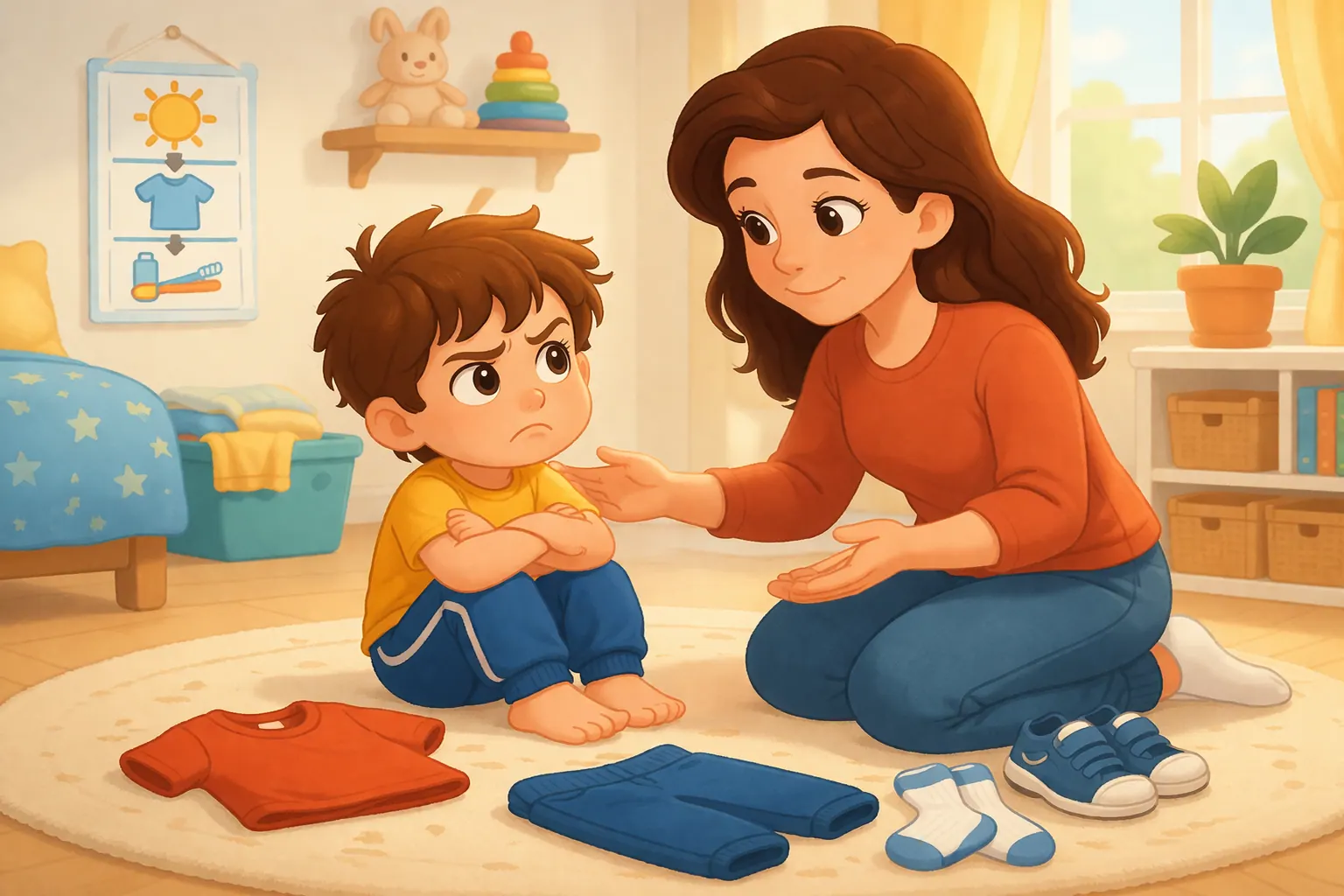
You have a great plan for the morning so that you don't have to rush or stress. There's a lot of time left before you have to leave the house. The clothes are laid out, and breakfast is ready. After that, your toddler sits on the floor and won't put their shoes on. Suddenly, the calm morning you were looking forward to turns into a tense negotiation.
If your child doesn't want to follow daily routines, you are probably feeling both frustrated and completely worn out. When a child fights against the very things that are meant to keep them safe and calm, it can feel very personal. There are times when you might wonder why every change has to be so hard.
Routine resistance is something that all parents have to deal with. They don't push back because they want to make you late or because they like a good fight. They are going through huge changes in their development that make stopping one activity and starting another feel very hard. Knowing what's going on below the surface can help you look at these situations with a fresh eye and come up with useful solutions.
What is healthy for this age?
Little kids are naturally curious and want to take charge of their lives. When a child is two to five years old, their main developmental task is to learn how to be independent. If your child's parent tells them what to do all day, they will naturally want to test those limits to see how much power they really have.
A young child also doesn't care much about time. Teenagers and adults live by the clock, but toddlers and preschoolers live in the present. The most important thing in the world is the tower they are building out of blocks. From their point of view, stopping that very interesting activity to brush their teeth seems like an unreasonable request.
Why this takes place
To understand the resistance, it helps to look at how the brain grows. The prefrontal cortex is the part of the brain that plans, organizes, and changes its focus. This area is very immature when a child is very young. Young kids don't have the mental flexibility yet to switch from playing to doing something that needs to be done.
Also, changes cause a small amount of stress in children. When they get out of bed and into the bright bathroom to brush their teeth, it's a big change in comfort and light. Kids feel more stressed when they are rushed or when they can tell that you are getting more worried about the time. This often leads to a fight, flight, or freeze response, which looks just like a temper tantrum or a sudden refusal to move.
What to Do If Your Child Won't Do What You Tell Them
It's natural to want to speak louder or repeat the instructions when you feel resistance building. It often works much better to move away from verbal commands and toward connection. Before you ask them to step into your world, take a moment to step into theirs. This will help you work together. You could have a quick two-minute break next to them to admire what they're doing before telling them what the next step of the day is.
Making visual anchors can completely change how you spend your days. A simple chart with pictures of morning tasks makes kids feel like they own them because they process pictures much faster than spoken words. You don't have to tell them what to do next. You can just point to the chart and let them figure it out. This changes the situation from a battle for power between parent and child to a team effort.
Another very effective way to get people to work together is to give them choices. You don't have to negotiate the routine, but you can give them freedom within the rules. It gives them the power they want to decide whether to hop like a frog or walk backwards to the bathroom. The routine still moves forward, though. Being playful is often the fastest way to get past a child's defenses.
Tips For Talking
"Those cars look like a lot of fun for you. It's almost time to go. Which would you like to take to the front door: the red or the blue car?"
"Let's brush our teeth now." If we have to go to the bathroom, should we march or tiptoe?"
"You don't want to put your shoes on right now." It's hard to stop having fun. I'll help you put on the left one, and you can do the right one."
"Let's look at your visual plan. What's next on the board now that you're done with breakfast?"
"I know it's sad to leave the park. We'll miss the swings, but we'll see them again on Saturday.
How to Avoid Trouble
Making your environment more predictable cuts down on friction by a huge amount. The brain doesn't have to work as hard to figure out what will happen next when the same things happen every day. If you can, do the steps in the same order every morning and every evening, even on the weekends. This will help your body get into a rhythm.
Make sure that your child gets enough food and rest. A child who is hungry or tired can't be flexible or work with others at all. Encourage them to go to bed early and every night so that their nervous system is rested and ready for the next day.
Add extra time between your transitions. Start the process twenty-five minutes early if you know it will take fifteen minutes to get out the door. Having that extra time gives you the peace of mind to stay calm when you start to dither, which happens all the time.
When You Should Ask For Help
Testing the limits is a normal part of growing up, but strong reactions to changes can sometimes be a sign of deeper problems. If your child has a lot of trouble with changes in routine or is very anxious about the schedule, or if the pushback is making it hard for your family to do normal things, you should always get help. A pediatrician or child development professional can help in a way that is best for the child and rule out any problems with processing sensory information or growing up.
Looking at the Big Picture
Setting up daily routines for a child with strong will is definitely hard work. You need to be very patient and creative and take lots of deep breaths. Do not forget that your child or the way you raise them is not broken. You are just showing a very young person how to get around in a world that moves much faster than them.
You will slowly see a change if you focus on connection, use visual aids, and make room for their growing independence. The resistance will soften, and those difficult transitions will slowly transform into moments of teamwork. You are building the foundation for a child who understands responsibility while still feeling heard and respected.