How to Get Your Child to Stop Whining (Without Yelling)
Whining can wear down even the most patient parent, especially when it seems to start the moment your child wants something. The good news is that you can respond in a calm, steady way that teaches better communication without turning every moment into a battle.
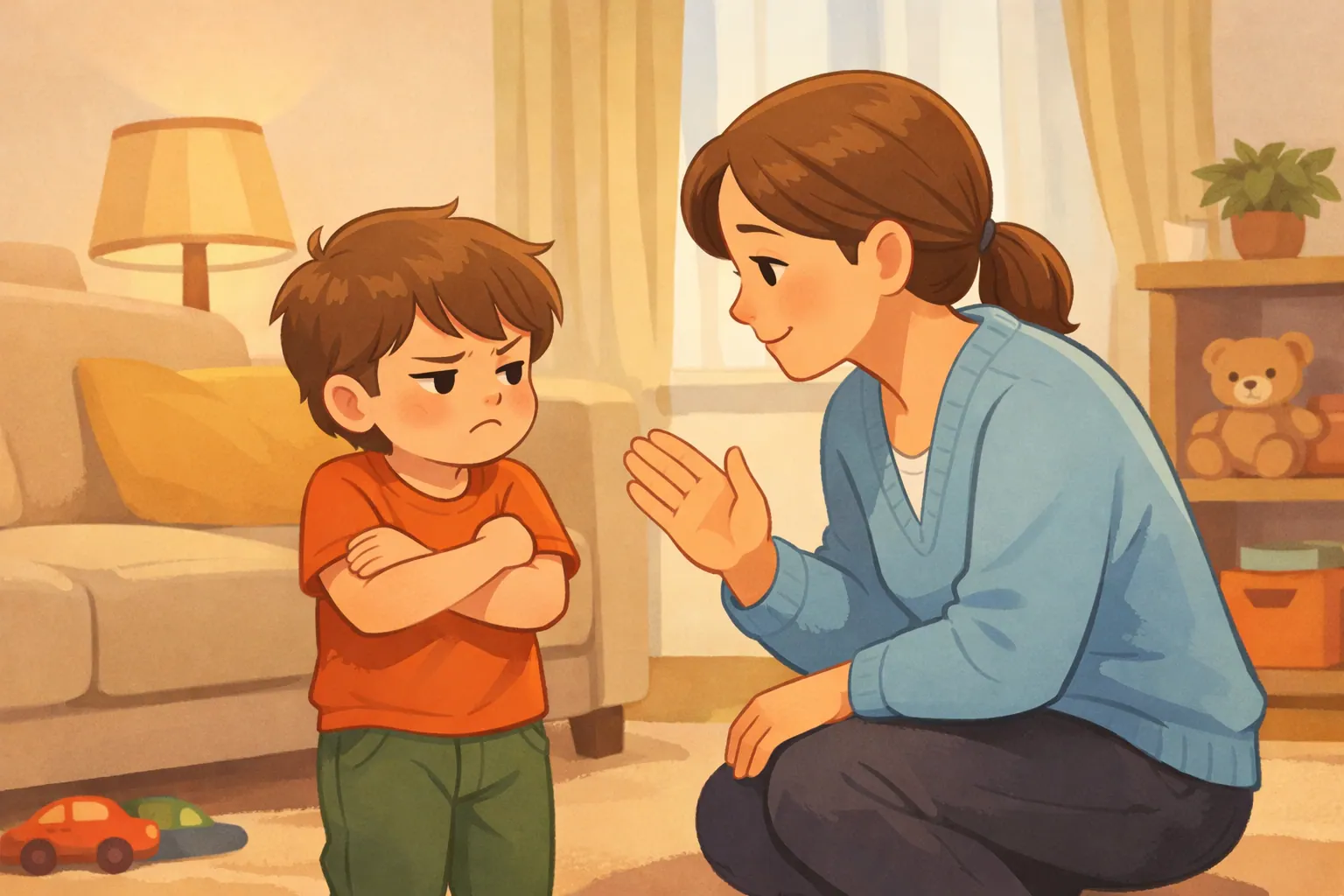
Whining is one of the most exhausting things a parent can endure. Sometimes the loudness isn't the key. When you're already exhausted, overworked, or stressed, it can be the tone or the repetition that gets to you.
Some things your child wants right now might be drowning out the sound, such as a snack, a toy, the wrong cup, or five more minutes of screen time. The temptation to snap, bargain, or give in to get it to stop becomes too great for even the most patient parents to resist after a while.
You shouldn't worry that your child is spoiled or manipulative just because this is occurring at your house. This is a sign that your child has figured out that there is a significant consequence for whining. Such a reaction might take the form of acquiescence, compromise, exasperation, or the attainment of one's goals.
Wallowing is a pattern, and patterns can change, which is encouraging. Your child will learn that a steady voice is more effective than a whiny one if you react calmly and consistently. It is absolutely feasible to make that change, but it does require practice.
Common for People of This Age
Preschoolers, toddlers, and even elementary school-aged children often whine. Disappointment can be difficult for young children to manage because they lack the emotional maturity, vocabulary, and patience to do so. They may start whining as a means of communication when they are exhausted, hungry, bored, overwhelmed, or crave human interaction.
The combination of genuine need and immature expression characterizes whining at younger ages. Even though they don't know what to say, a child may really need your assistance, attention, relaxation, or comfort. Because it has been effective in the past, whining can also become ingrained in older people.
Because of this, it's helpful to see whining not as a defense mechanism but as a communication issue and a chance to learn something new. Your little one is still developing social skills, such as asking, waiting, being patient, and dealing with disappointment.
Why Does This Occur?
For children, whining is a quick and easy way to communicate their discomfort. It manifests itself when a youngster is uncertain of how to calmly express a need, is exhausted, overstimulated, or feels helpless.
Also included is a basic section on brain development. Having strong self-control is a later development than strong emotions in children. Right now, our emotions are running stronger than our rational thinking. This is why, instead of expressing a brief dissatisfaction, one might wind up with a drawn-out gripe.
It is also possible for parents to unintentionally reinforce whining. The brain learns an important lesson when a child's whining for juice leads to the acquisition of juice. It makes no difference if the parent is first irritated, negotiates, or delays; the lesson will still be taught in the end.
Squawking can be a way to try to get someone's attention. An irritable tone may be the only way for a child who feels ignored, rushed, or disconnected to get someone's attention quickly. You shouldn't give in to the whining because of that. This indicates that incorporating both boundaries and connections into the solution improves its performance.
Alternative Strategies
Stop making the whining voice the focal point of the conversation if you want your child to stop whining without resorting to screaming. Instead, model for your child the importance of responding politely when they speak to you.
That includes maintaining composure even when the volume is high. A lengthy lecture is unnecessary. Your level of intensity should not be matched by your child. In most cases, a brief, steady reaction will do the trick. Pause after assuring your child that you will listen when they speak normally.
For a while, you may have to keep doing this. No big deal. Your child will try to see if the old pattern of whining still works if it has been effective for some time. Here, steadiness is more important than ferocity. Calm repetition is more effective than yelling out corrections.
Removing the tone from the request is also helpful. There might be a genuine need, but the delivery is still in the planning stages. Warmth and firmness are not mutually exclusive. As a parent, you are not disregarding your child in any way. The whining style of communication is not something you are willing to engage with.
There are instances when children require immediate guidance. A straightforward instruction such as, "Try that again in your regular voice," provides them with a distinct direction to follow. Knowing precisely what to do, as opposed to just being told what not to do, helps a lot of kids.
Keeping going even when you're tired is another crucial component. This is usually when people start to complain the most. It only takes a little whining to get a yes from your child, and then it becomes a habit. Kindly maintaining a limit is acceptable. Your child's anger is normal and not harmful. As a person develops, they learn to deal with it.
Making a connection is important. A persistently complaining child may benefit from reduced abrupt changes in activity, more consistent attention throughout the day, more downtime, or established habits. When your child isn't completely depleted, setting limits becomes much easier.
Words to Use
Listen to me. Just repeat it using your normal voice.
Whining is something I just don't get. Take a deep breath and give it another shoot.
It seems like you're quite interested in that. Please ask me clearly.
"I perceive that you are distressed. "When you speak politely, I will assist you."
You seem to be going through a tough time, according to that voice. Relax and give it another shot.
Feeling let down is normal. Complaining to me is unacceptable.
Tips for Prevention
Instead of responding to whining all day, it's usually better to just avoid it. Tiredness, hunger, or sudden transitions from one activity to another are common triggers for children's whining. You can lessen the amount of resistance before it begins by having a little snack, making the transition easier, or focusing for ten minutes.
The benefit of routines is that they reduce uncertainty. Kids don't have to be as bossy when they know what to expect after school, before dinner, and before bed. For them, having things go according to plan helps with coping.
Noticing and reinforcing the type of communication you would like to see more of can also be helpful. React gently and lovingly whenever your child asks you a question. If they pause, even for a second, make note of it. What gets noticed is what children mimic. An expression as simple as "I appreciate how explicitly you inquired" can have a profound impact.
You have the option to practice when things are easy. Try acting out the contrast between a normal voice and a whiny one when things are quiet. Make it simple. Allow your kid to try both. The next step is to present the version that facilitates listening. Surprisingly, this type of lighthearted exercise can yield positive results.
Finally, keep an eye out for trends. You can learn a lot from observing whether whining is more common at specific times of day or in relation to particular activities. Perhaps your child would benefit from a later bedtime, less screen time in the hours leading up to transitions, or more preparation before running errands. Changing the routine every day can help with the behavior.
Reasons to Get Second Opinions
Whining is not necessarily an indication of a major problem when it occurs on its own; it is more often a typical behavioral issue. Consult your child's pediatrician or a child development specialist if you notice that your child is consistently overly distressed, has tantrums accompanied by persistent whining, has serious communication difficulties, or acts significantly older than their chronological age would indicate.
Additionally, this can be useful if you find yourself mired in an endless cycle of conflict with no apparent way out, no matter how hard you try. Help is not the same as failure. Getting a bird's-eye view of the situation can help you see the big picture and identify the factors driving the pattern.
The Overall View
The annoying thing is that whining can be changed. By responding calmly and clearly instead of raising your voice, you are teaching your child how to communicate effectively even when things get tough.
A flawless tone is not required on a constant basis. No need to suddenly stop being a complainer. Most helpful is a consistent message: I will assist you in learning to communicate respectfully and will listen to you when you do so.
Your child will eventually learn that cries for help do not lead anywhere, but that talking calmly does. That is a skill that will help far beyond this phase, and it starts with small, repeated moments of calm authority at home.