How to Teach a 4-Year-Old to Play Independently (Without Screens)
Independent play sounds like it should be natural, but many 4-year-olds still need a lot of connection to feel safe starting on their own. With a few calm routines and the right words, you can help your child build this skill without turning to screens.
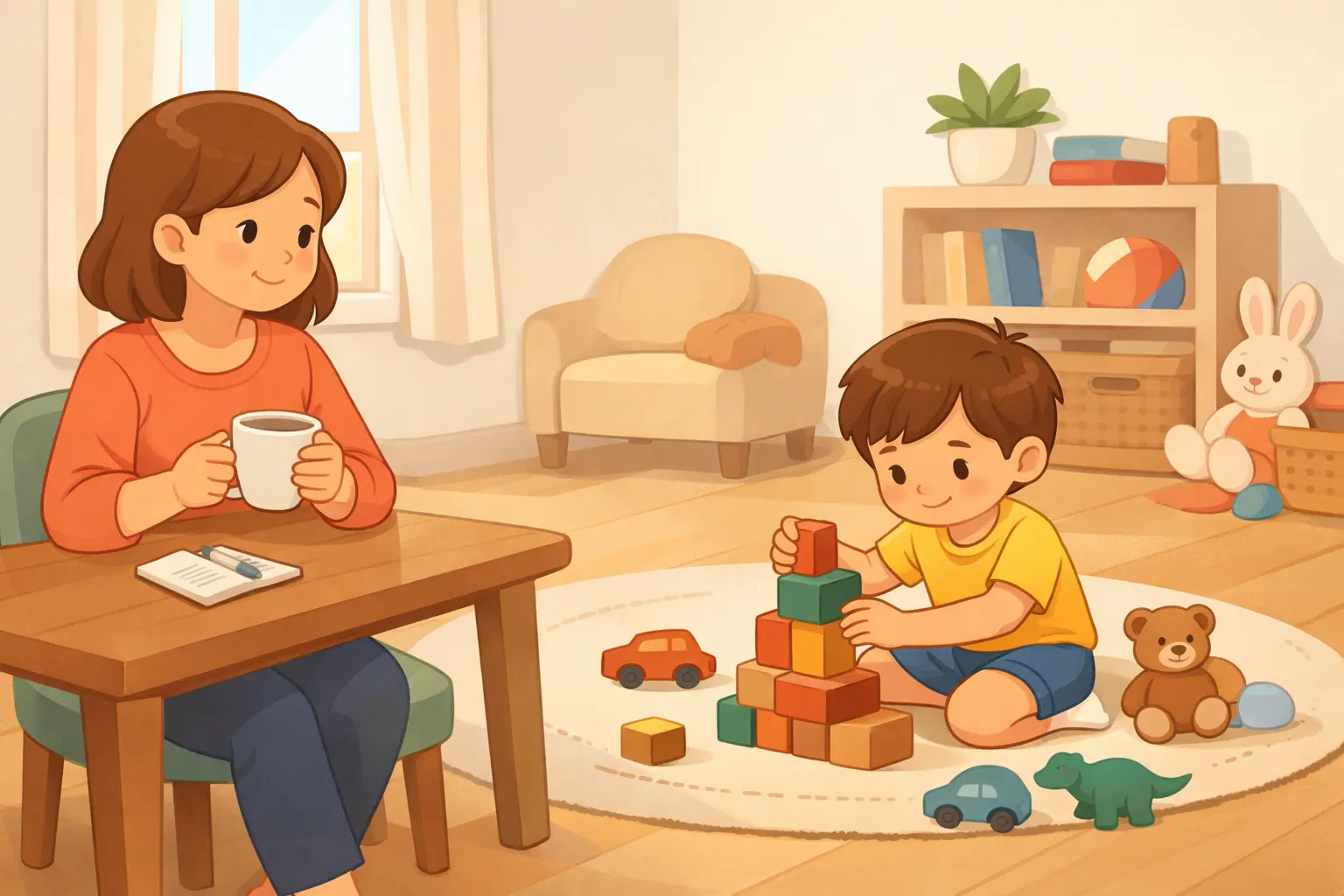
There are times when, as a parent of a 4-year-old, you sit down to answer a message, do some dishes, or just take a moment to breathe, and your child comes running up to you and asks what to do. This is not a negative attitude. It's more like they really don't know how to stay alone for long.
Kids either "do" or "don't do" independent play, but it's usually a skill. It's easy for some kids to get into play because it fits their personality. Others need a lot more help getting going, especially if they've had a busy day, adults have been busy, or screens have become the easiest way to start over after a difficult day.
If you want to teach a 4-year-old how to play without screens, you don't need a fancy house or a strict routine. A calm routine, a simple setup, and the right words will help your child know you're still close, even when you're not playing.
Managing stress is a skill that parents get better at over time. "Barely anything" is less than five minutes of free play. In preschool, it's often the start of real confidence.
What is healthy for this age?
Kids who are four years old are creative, friendly, and very close to the adults they trust. They have many ideas and want to share them with everyone. That's why many kids can play alone but keep coming back every few minutes to see if you're still there, ask a question, or get you involved in the story.
Also, it's normal for them to have trouble with the "beginning." They might have many toys, but they'll still say, "I'm bored," because it takes work to decide what to do and start it. Screens take away all of that work. Kids who are bored will often turn to screens first because that's where the fun starts for them.
If your child doesn't play alone yet, it doesn't mean they're lazy or that you did something wrong. Usually, it means they need a better way to go from being with you to being alone.
Why this takes place
Three things are necessary for independent play: a safe place to feel, a clear place to begin, and a sense of progress.
Feeling connected makes you feel emotionally safe. When a child is uncertain, alone, or stressed, they tend to "orbit" around you. They may interrupt you, ask for snacks they don't need, or ask for screens when it's not about screens. You are what they use as an anchor.
The second piece is a clear place to start. Many kids have toys but no idea what to do with them. Playing is a minor executive-function challenge: you must choose to do it, start it, and accept that it may be boring. That is still growing at age four.
The last part is momentum. When the game starts, it usually goes on longer than you think. But it can be challenging to get through the first minute, so kids come to you right away. Knowing these facts helps you act in a different way. You tell your child to go play and show them how to begin.
What Not To Do
For a 4-year-old to learn how to play without screens, try a gentle pattern that you do every day: connect, set up, step back, and return.
Start with a small deposit to connect. Please provide them with two to five minutes of your undivided attention before they begin playing independently. There is no multitasking and no phone use. This practice isn't making them sick. They won't be able to connect while you're busy because the cup is full.
Then get ready to play by making it easy to start. This is where many families make things harder than they need to be. Children often feel overwhelmed when they can play with all the toys at once and move from one toy to another without starting anything. Please select one "starter activity" and prepare it. There are half-built block towers, a train track with the first loop already built, play dough on the table with two tools, a small basket of toy animals with a scarf that can be used as a "zoo," or crayons next to a piece of paper with the first circle already drawn on it.
When they start, move back, but at first stay close. You don't have to disappear when you play alone. You can do something quiet while sitting close to them so they know you're there. As their confidence grows, you slowly move farther away from them over time. Your job at first is to be easy to guess. If you mention you'll be nearby, please ensure you are present. You should really check in soon if you say you will.
A timer is very helpful in this case because it makes the line less clear. Start out small. Five minutes is a good start. After the timer goes off, check out what they did and connect again. It's that return that builds trust and makes the next round possible.
Tips For Talking
The words are important because kids are listening to hear one thing: "Are you still with me if you're not playing?"
Check out these short stories. Stay calm and sure of yourself, as if you're outlining the plan instead of negotiating it.
"I need to finish my work for five minutes, and then I'll come back to see what you made."
"You want me to play with you?" I'll do it. It's time to play alone first, then with other kids.
"It's tough to begin. I'll help you get started, and then you can do it yourself.
"We don't need screens right now." Pick either blocks or drawing. "You decide."
"I will stay close while you begin." I'll be right here.
"You can show me what you made when the timer goes off."
It's best to use these scripts more than once. Kids in preschool learn the routine by hearing the same words over and over.
How to Avoid Trouble
The environment and rhythm should help kids play alone more easily. Making independent play a daily habit instead of just something you do when you need a break is one of the biggest changes.
Select a time that is already set aside in your schedule. It works well to do it after breakfast, before dinner, right after school, or after a bath. Just call it "solo play" or "quiet play." You don't notice it as much when you give something a name. It becomes a normal part of your day.
Pick out a few toys to play with. It might not make sense, but this is one of the best strategies. Kids can't play when they have too many choices. They can't decide what to do. You could switch out the toys once a week and only keep a small set out at all times. Most of the time, a few loose toys are better than a room full of toys.
Also, be careful when you say "rescue." It's easy to come up with five things to do when a child says, "I'm bored." But that shows them that your mind is what makes their games work. Ask them one simple question: "What's your plan?" If they can't answer, give them 20 seconds to start and only give them two options. After that, take another step back.
Lastly, pay attention to the times when there are many screen requests. Many people do it after school, before dinner, or while they're on the phone. At those times, you should have a starter activity ready, since planning is always better than willpower.
When You Should Ask For Help
Most problems with playing alone are normal and get better with routine, connection, and practice.
You might still want to talk to your pediatrician or a child development professional if your child gets very upset whenever you leave the room, if play often turns into panic or aggression, or if you've noticed a sudden change in behavior that lasts for weeks. Being "right" doesn't mean you need help. It just helps you know what to give your child so you can do it with confidence.
Looking at the Big Picture
Allowing your child to play alone is more than just a way to keep them busy. Playing alone improves focus, creativity, the ability to handle frustration, and confidence. A child learns in a very useful way that they can be in a small space and still feel safe.
Small steps help this skill get better. It's okay if your kid plays by himself for five minutes today. It's also okay if tomorrow is a mess and they need you more. Over time, the steady routine and knowing when you'll be back make a difference.
You don't want to push your kid away. You are assisting them in learning to stand independently for brief periods, with you serving as their stable foundation in the background. That’s a healthy kind of independence, and it tends to stick.