What to Do When Your Child Refuses to Apologize
When your child refuses to apologize, it can feel embarrassing and frustrating. But forced apologies rarely teach empathy. Here’s how to handle it in a way that builds emotional growth and real accountability.
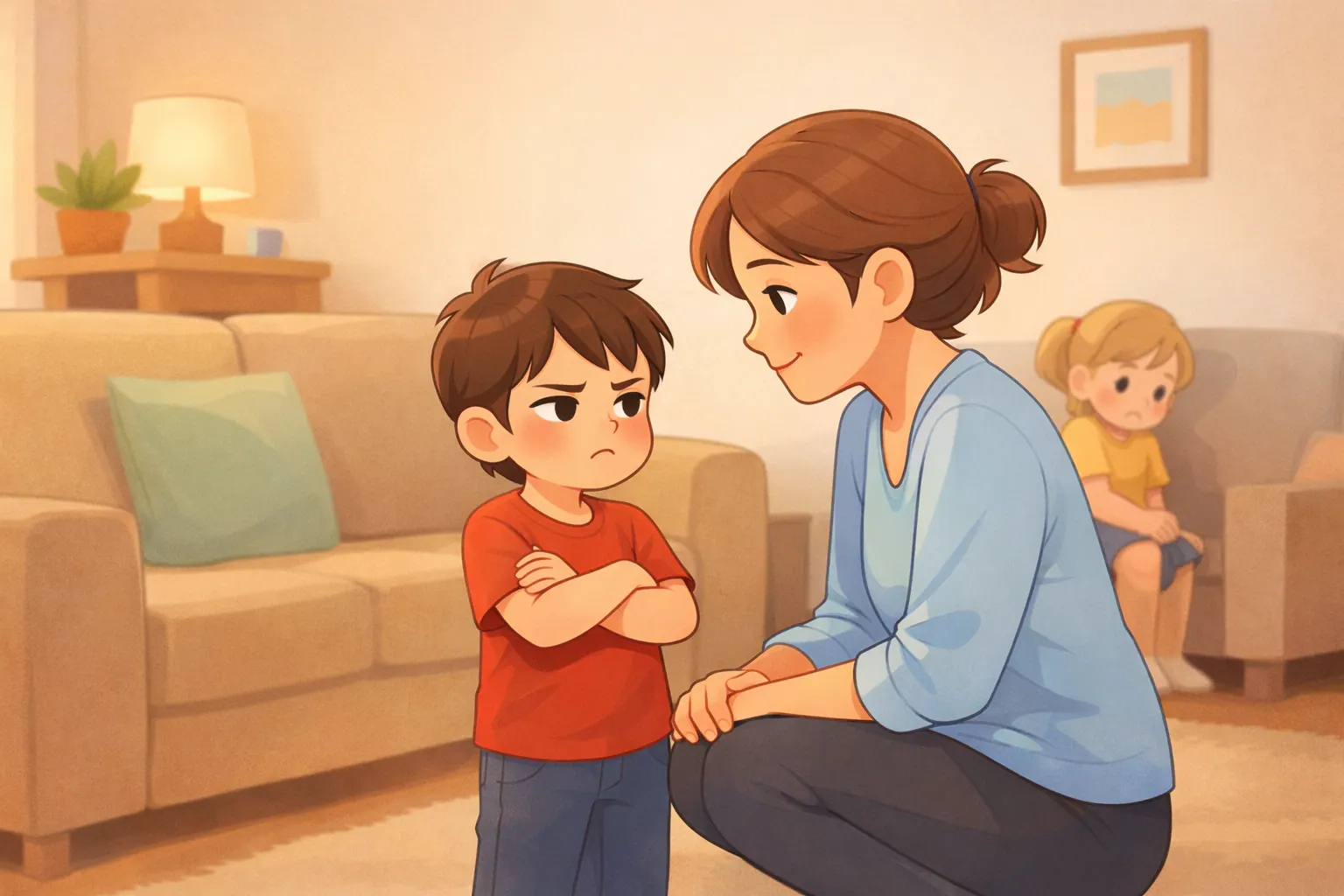
Few parenting moments feel more uncomfortable than when your child hurts someone and then flatly refuses to say sorry.
Maybe they pushed a sibling. Maybe they grabbed a toy. Maybe they yelled something unkind. You look at them, waiting for those two small words, and they cross their arms or look away.
When your child refuses to apologize, it can feel defiant. Embarrassing. Even alarming.
But here is something important to remember. Refusing to apologize is usually not about disrespect. It is about emotional skill.
And skills can be taught.
What’s Normal at This Age
Young children are still developing empathy, impulse control, and emotional regulation.
Toddlers and preschoolers often understand rules before they understand feelings. They may know that “hitting is wrong,” but they do not yet fully grasp how their actions affect others internally.
Even elementary-aged children can struggle when emotions are high. If they feel embarrassed, angry, or defensive, their brain shifts into protection mode. In that state, apologizing feels like losing.
So when a child refuses to apologize, it is often because:
They are still upset
They feel ashamed
They do not believe they were wrong
They do not yet connect behavior with impact
This is developmental, not malicious.
Why This Happens
When emotions surge, the thinking part of the brain goes offline for a while.
A child who just pushed a sibling might still be flooded with frustration. In that moment, asking for an apology is asking them to access empathy while their nervous system is still activated.
On top of that, some children experience apologies as humiliation. If they feel forced, they may dig in harder. The refusal becomes about control rather than responsibility.
Ironically, the more pressure we apply, the less genuine the apology becomes.
Our goal is not obedience. It is empathy.
What To Do Instead
First, regulate the moment.
Lower your voice. Slow your breathing. Separate children if needed. Address safety before addressing manners.
Then describe what happened without accusation.
Focus on impact rather than character. Instead of labeling your child as mean or rude, point out what the other child experienced.
Give your child space to calm down before expecting ownership.
Later, when emotions have settled, guide them toward repair. Repair does not always mean saying sorry. It can mean helping rebuild a block tower. Offering a hug. Getting ice for a bumped knee. Drawing a picture.
When children participate in repair, they learn responsibility in action.
You are teaching that mistakes can be fixed, not hidden.
What To Say
Here are simple scripts that keep authority calm and steady:
“I see you are still upset. We will talk about this when your body is calm.”
“Pushing hurt your sister. Look at her face. She is crying.”
“You do not have to say sorry right now. But we do need to fix what happened.”
“When you are ready, you can choose how to make this better.”
“In our family, we take care of each other when someone gets hurt.”
Short. Clear. Grounded.
Prevention Tips
Empathy grows through everyday conversations, not lectures after mistakes.
Talk about feelings during calm moments. Ask questions like, “How do you think that character felt?” when reading books. Name emotions you observe in real life.
Model apologies yourself. If you snap or make a mistake, say, “I am sorry I raised my voice. That was not kind.”
Children learn more from what we demonstrate than what we demand.
You can also practice repair skills proactively. Role-play small conflicts. Practice phrases like, “Can I have it when you are done?” and “I did not like that.”
Preparation reduces resistance later.
When To Seek Extra Help
If your child consistently shows no concern for others’ feelings across many situations, or if aggressive behaviors are frequent and intense, it may help to talk with your pediatrician or a child development professional.
This does not mean something is wrong. It simply means you are gathering support early.
Trust your instincts if something feels beyond typical developmental behavior.
The Bigger Picture
A forced apology might bring short-term relief. It may satisfy the watching adult in the room.
But a sincere apology grows slowly.
When your child refuses to apologize, you are not failing. You are witnessing a skill that is still under construction.
Stay steady. Teach repair. Model empathy.
Over time, those two small words will come. And when they do, they will mean something.