Why Your Child Melts Down After School (And How to Prevent It)
Your kid keeps it together all day, but as soon as they get home, they fall apart. Most parents don't know how common after-school meltdowns are. This is how to understand what's going on and stop it in a gentle way.
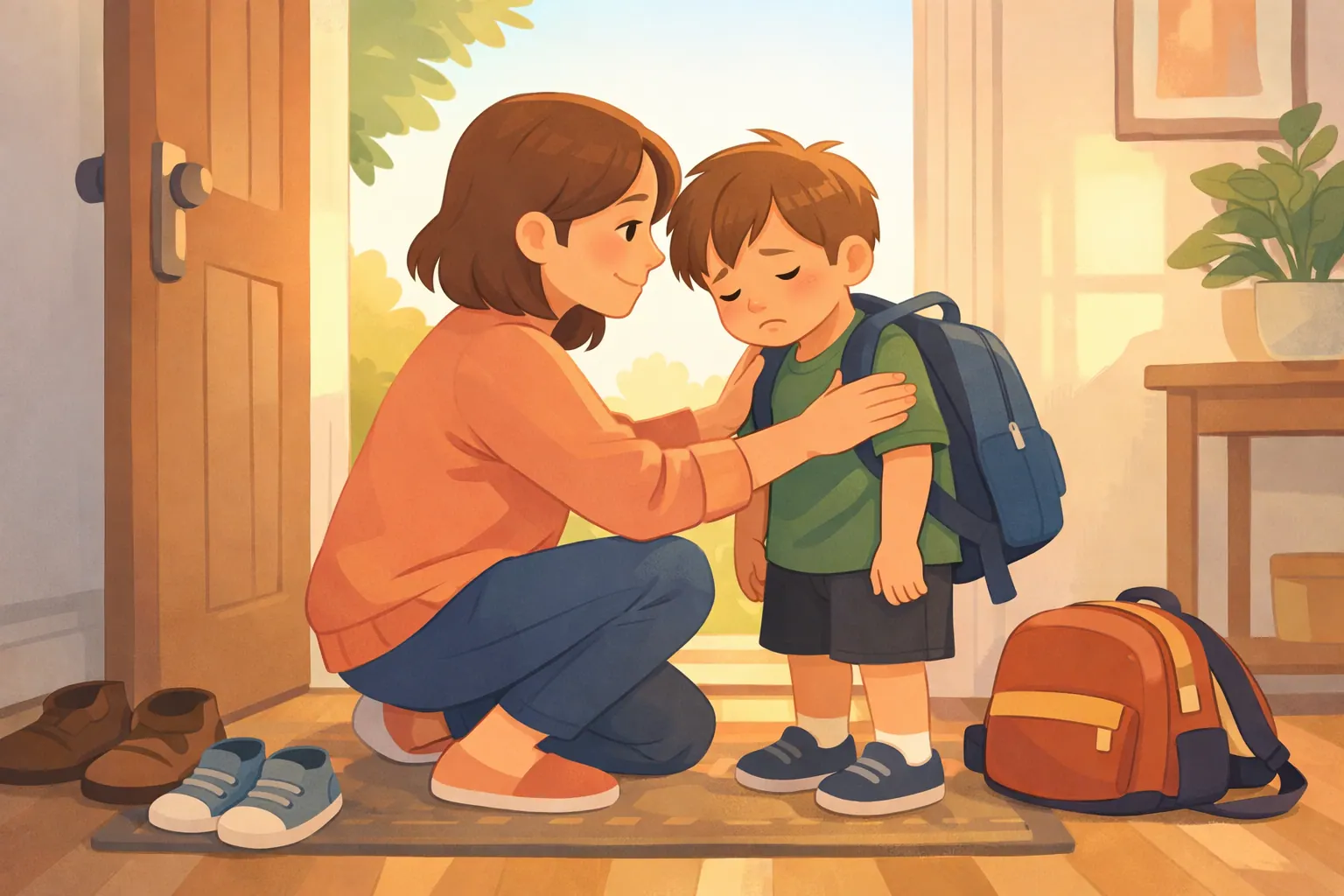
You wait all day to see your kid. You think about a happy reunion, maybe a short talk about how their day went.
You get tears instead. Anger. Complaining. Total breakdown over something small, like the wrong snack.
You are not the only one whose child has a meltdown after school. A lot of parents go through this same pattern and don't know what to make of it. The teachers said the day went well. Your child "did great." So why does it break down at home?
What seems like defiance is usually just being tired.
Let's talk about what's really going on and what you can do to make the afternoons less hectic.
What Happens at This Age
School takes a lot of self-control for kids in preschool and elementary school.
They don't move. They do what they're told. They give. They wait. They deal with frustration. They want to make adults happy. They make their way through friendships.
That's a lot for a brain that's still growing.
Young kids don't yet have fully developed systems for controlling their emotions. Their brains are still figuring out how to deal with stress, changes, and peer pressure. So they keep it together at school, where they know what is expected of them.
Then they go home, where they feel safest.
And they let go.
Some people call this pattern "school restraint collapse." It just means that your child ran out of energy to deal with things during the day.
What Causes This
Your child's brain is in "performance mode" when they are at school.
They are keeping an eye on the rules, reading social cues, and holding back strong emotions. That takes mental energy. It gets the prefrontal cortex going, which is in charge of making decisions and controlling things. That system gets old quickly for little kids.
At the end of the day, stress hormones are high. Your blood sugar could be low. Noise, lights, and activity can overload the sensory systems.
Home is a safe place. Safe means that feelings can come out.
So when your child has a meltdown after school, it's usually not because they're trying to get something. It lets out emotions.
They are not choosing to give up control. They are running low on gas.
What You Should Do Instead
The first thing to do is to stop asking so many questions.
A lot of parents say "How was your day?" when they see their child. and then more questions. That feels like another demand for a tired brain.
Instead, lower the stimulation.
Make a routine for decompressing that you can count on. Think of it as a daily restart.
Give them a snack right away. Hunger makes meltdowns worse. Make it easy and keep it the same.
Give yourself 20 to 30 minutes of quiet time to get used to the change. That could mean drawing, building, reading, or just sitting next to you. Not yet any homework. No work to do. No big talks.
Right now, limit screens. Screens may seem calming, but they can make a tired brain work too hard.
Stay calm and grounded if your child starts to fall apart. Your nervous system sets the mood. You don't have to fix how you feel. Just stay still.
Over time, this predictable rhythm teaches their brain that afternoons are safe and manageable.
What to Say
When your child has a meltdown after school, short, steady words work best.
"I'm glad you're back."
"You put in a lot of effort today."
“Let’s get your body some food first.”
"You don't have to say anything yet."
“I’m right here.”
"It's fine to be tired."
These scripts help you relax. They talk about safety without making any demands.
Tips for Avoiding
Instead of seeing after school as a time to get things done, think of it as a time to relax.
Take care of the first 30 minutes after you get there. Try not to plan activities right after school whenever you can. If you can't avoid them, make sure you have some quiet time before you leave again.
Keep snacks the same. Eating foods you know lowers stress.
Before the full meltdown, look for small signs of being overloaded. Being irritable, clingy, or suddenly silly can be signs of being tired.
Make homework easy to guess. Same spot. Same time. The same steps. Routine lessens emotional tension.
Lastly, make a connection before you fix things. A quick hug or five minutes of focused attention can stop an hour of fighting later.
When to Get Extra Help
It's normal for kids to have meltdowns after school sometimes.
If your child's reactions are very strong, last for hours every day, include aggression that seems out of control, or affect their school performance, it might be a good idea to talk to a pediatrician or child development expert.
It's not too much to ask for help. You are getting information.
The Big Picture
It can feel like it's your fault when your child has a meltdown after school.
No, it isn't.
In a lot of ways, it's a strange compliment. Your child trusts you enough to show you their true feelings.
It's not your job to stop every meltdown. It is to create a rhythm that makes them shorter, softer, and less frequent as time goes on.
Afternoons don't have to feel like you're in survival mode.
If you follow the right reset routine, they can be the calm place your child needs every day.