Why Your Child Won’t Clean Up (And How to Teach It Step by Step)
Cleaning up can feel like a daily battle, especially when you're already tired. Most of the time, "refusing" is just a lack of skills. Kids can learn to clean up without fighting if you make a few small changes.
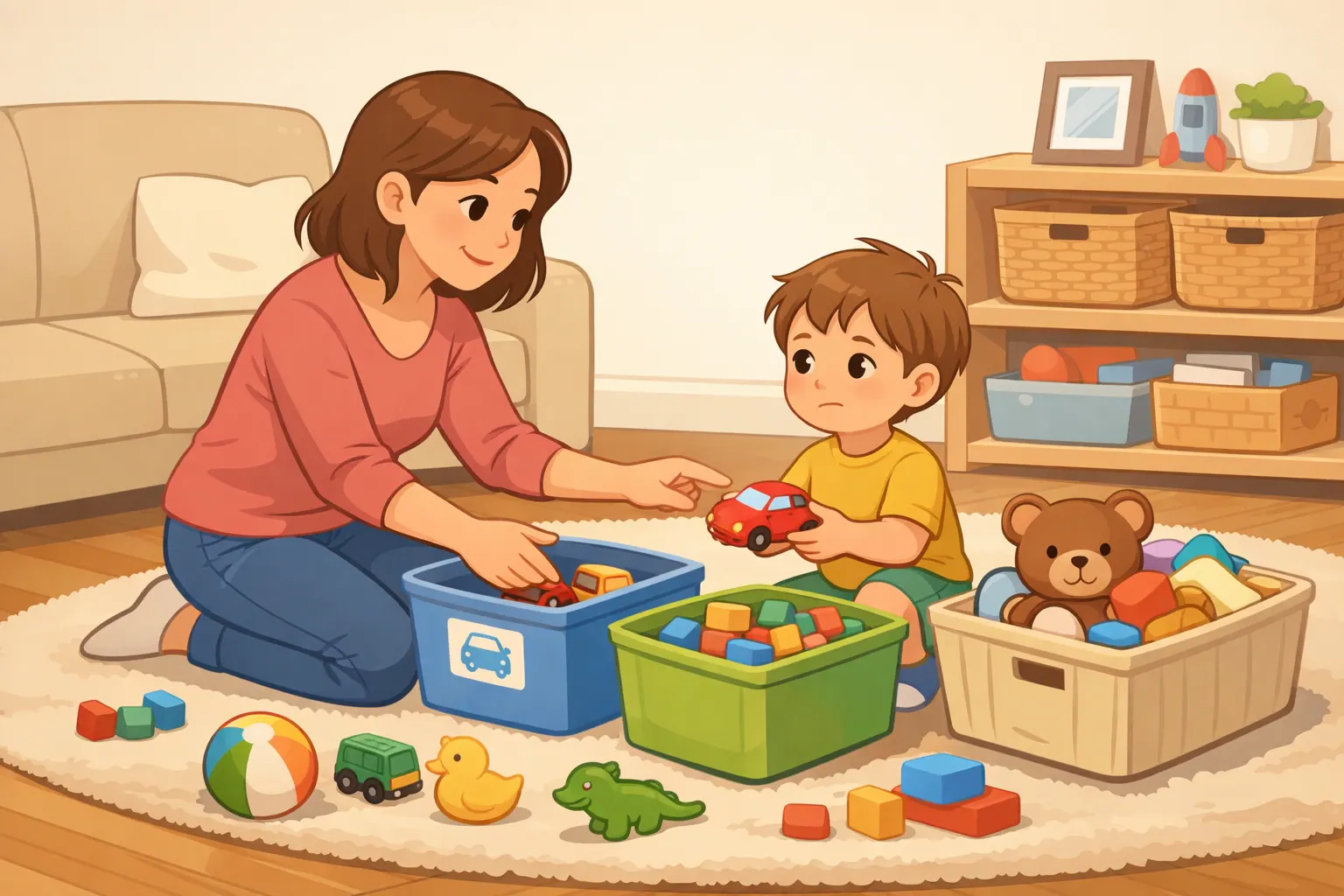
When you ask your child to clean up and they look at you like you just asked them to do a whole home renovation, it's a special kind of frustration.
You try again. You explain. You make a deal. You threaten a punishment that you don't even want to carry out. You both get upset all of a sudden, but the toys are still where they were.
You're not failing if this is your house sometimes. Kids are asked to do something that seems easy to adults but is actually hard for them in many sneaky ways every day.
And the best part is that it becomes much easier to teach once you realize that cleaning up is a skill that can be learned, not a trait of your personality.
What’s Normal at This Age
Many parents wonder why their child won't clean up when they can clearly understand what you say. The missing part is that understanding a request and being able to do what was asked are two different things.
"Clean up" can be too big and vague for toddlers and preschoolers. They may not know how to begin, stay focused, or organize.
For kids in early elementary school, the problem is often motivation and momentum. They can do it, but they don't want to stop what they're doing, they feel rushed, or they're used to adults stepping in when they get stuck.
Kids of all ages often resist cleaning up when it feels like a sudden demand that interrupts their fun, especially if they lack a warning or control over it.
Why This Happens
When a kid won't clean up, it's usually because of a few things that are true about their brain and life, not because they have a "bad attitude."
Cleaning up needs executive function
Cleaning up requires planning, sorting, remembering where things are, making decisions, and sticking with a boring task. Childhood is still shaping these skills. You might think the floor is messy, but for a child, it can feel like a confusing pile with no clear starting point.
Changes are really hard.
Stopping play is a change. A lot of kids have trouble changing gears, even when they know it's time. Ignoring, whining, negotiating, or suddenly needing a snack right now are all signs of resistance.
The request seems too big.
"Clean your room" can sound like "climb a mountain." Kids might freeze, act silly, or fight because they don't know how to explain it.
Power struggles happen quickly.
Your child may already expect to fight if cleanup has become a regular thing. Even a calm request can make someone defensive because that's how they usually react.
They still don't know the routine.
Repetition builds responsibility. Kids don't get enough consistent practice to feel capable because adults usually end up doing most of the cleaning.
What You Should Do Instead
This is the step-by-step method that teaches you how to clean like a pro. This can change the whole mood if you've been fighting every day.
Step 1: Make the job smaller
Instead of "Clean up," set one small, clear goal.
Give it a shot:
"Put the cars in the blue bin."
"First, let's pick up all the markers."
"Put your shoes by the door."
When kids do well on a small step, their brains get a quick win, which makes them more likely to keep going.
Step 2: Make the beginning simple
Most kids have a hard time getting started. So at first, you are the "starter motor."
Do the first ten seconds together:
Get two things at the same time.
Give them one thing and show them where it goes.
Start with a simple "ready, set, go."
You aren't doing it for them. You're showing them what "begin" means.
Step 3: Use visual homes for things
When toys don't have clear places, cleaning up is like playing a game of guess.
A few quick fixes:
Open bins with pictures of cars, blocks, and dolls on them.
One basket for a mix of "tiny things"
A basket for toys that don't fit anywhere else, like a "parking spot"
Fewer decisions mean less resistance.
Step 4: Make the cleanup routine predictable
Instead of getting random requests to clean up all day, make cleaning up a part of your routine.
For example:
Before the snack
Before time on the screen
Before you leave the house
Story before bed
Predictability makes pushback less likely because it stops feeling like a personal attack. It turns into "what we do next."
Step 5: Give people options that still lead to cleaning up
Kids work together better when they feel like they have some power. You can give people options without crossing the line.
Give it a shot:
"Do you want to start with books or blocks?"
"Do you want to clean up with music or in silence?"
"Do you want to work with me or race me?"
The goal is still the same. The path seems to be able to change.
Step 6: Coach, then disappear
At first, you'll be in charge more. You step back over time.
A simple step-by-step process:
Week 1: You tell the steps while we clean up together.
Week 2: You give one step at a time and praise hard work.
You make a short plan for Week 3: "First books, then blocks."
You ask, "What's your first step?" in week 4.
This is how independence grows without always being at odds.
What to Say
If your child won't clean up, here are some scripts that might help. Make them short, calm, and easy to repeat.
"Time to clean up." "Put the cars in the bin first, then we can move on."
"I'll help you get started." "Let's do five together."
"It's hard to stop playing." We're going to change gears now.
"Do you want to pick up the crayons or the blocks first?"
"When the toys are put away, it's time for a snack."
"I'm not angry. This is just the next thing we have to do today.
You don't need to have a long argument with your child if they argue. Say the same short line again and point to the first small step.
Tips for Avoiding
To have fewer cleanup fights in the long run, make it easier to do well at cleanup.
Make fewer things available
Having too many toys out makes the job too hard. Try rotating: keep some toys put away and switch them out every week. Less mess, quicker cleanup, and calmer play.
Do quick "reset" cleanups
Cleaning up often and for short periods of time stops the disaster that seems impossible at the end of the day. Even two minutes before a change can help.
Make it social every now and then
Kids often clean better when they are connected. Even if you're not doing the work, you can help with "team cleanup" by being there and involved.
Get them to do it right
Pay attention to effort, not perfection:
"You remembered where the puzzles belong."
"You kept going even when it was hard."
"You did that without me asking you twice."
This gives you a sense of who you are: "I'm someone who can do this."
Avoid harsh punishments and instead use natural consequences.
The next activity has to wait until the cleanup is done. That's a normal thing that happens, and it keeps you from getting punished.
"When the toys are put away, we'll start the movie." Not harsh, calm, and predictable.
When to Get Extra Help
If cleaning up is making your child have daily meltdowns that feel very bad, or if they can't follow multi-step directions even with a lot of help, it might be a good idea to talk to your pediatrician or a child development expert.
If you notice that your child has trouble with attention, transitions, sensory overload, or emotional regulation at many times of the day, not just during cleanup, you might want to think about getting them extra help.
You're not looking for a name. You want tools that are right for your child.
The Big Picture
Your child not cleaning up often has nothing to do with being lazy or rude. Most of the time, they need smaller steps, a clearer schedule, and a lot of practice to feel like they can do it.
One of those parenting skills that gets easier when you stop trying to "win" and start teaching it like you would anything else: gently, consistently, and in small chunks.
You're making a person who will help in the future. And it all starts with a small action, like putting the cars in the blue bin.